Specifically tailored for each unique location the Detainment BundPS120 design ensures that the storage capacity of the bund is appropriate for the catchment area. From big-picture strategic planning and whole-of-catchment assessments right down to farm-scale Detainment BundPS120 scoping we strive to help you achieve your water quality and stormwater management objectives. A decade of applied-scientific research within New Zealand is proving the benefits that well-designed bunds can achieve.
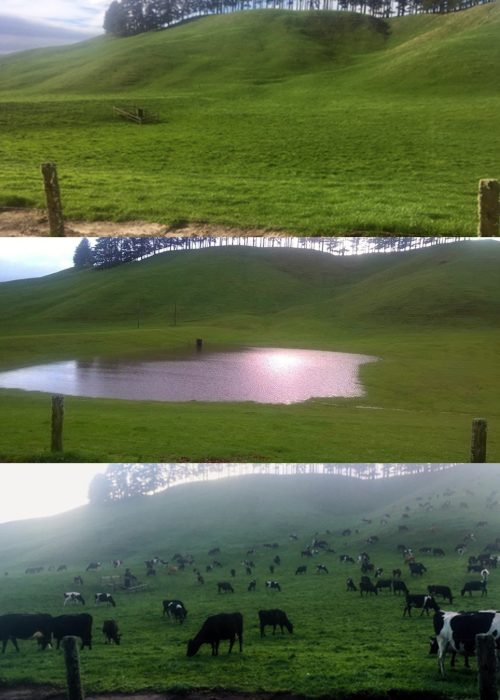
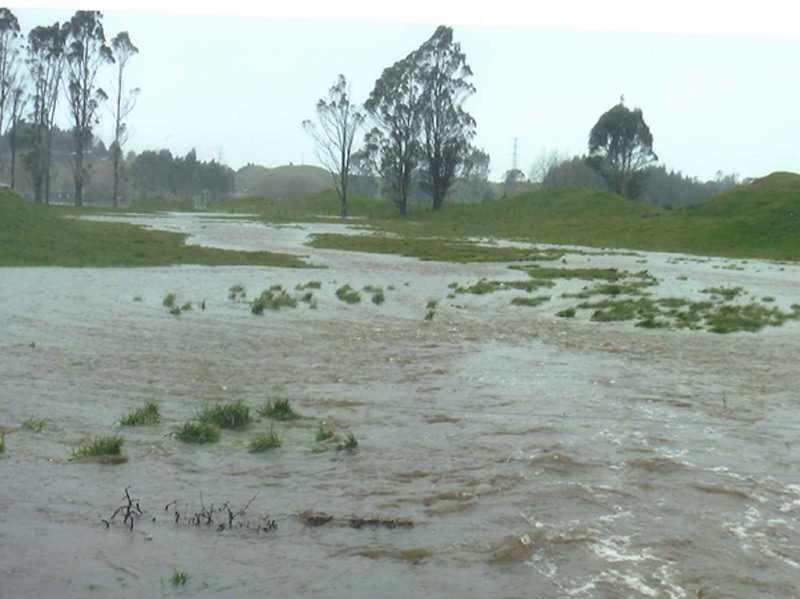
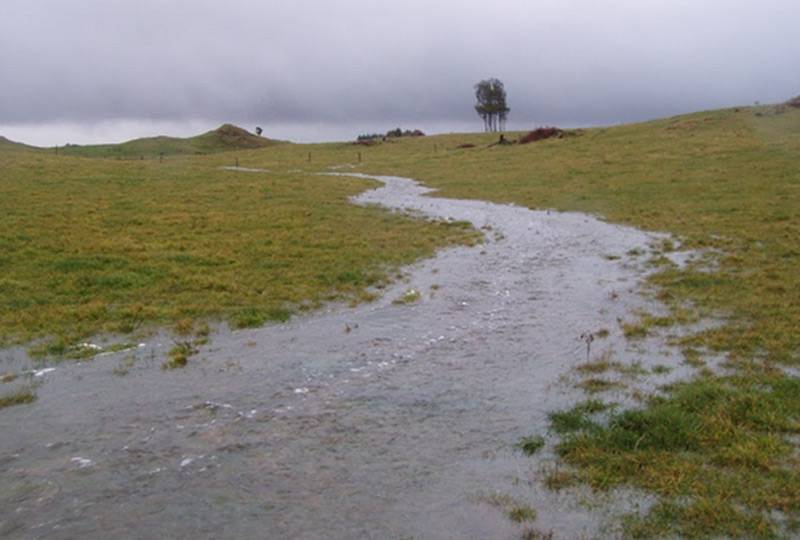
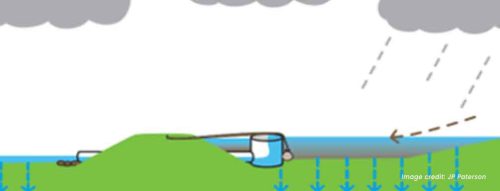
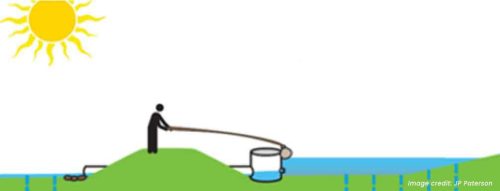
For best mitigation performance the pond can be held for up to 3 days before release back into the flow pathway. View the images and diagrams below which explain how a Detainment Bund PS120© works.
A bund is built into the lanscape using LiDAR and GIS to determine the best bund height and location.
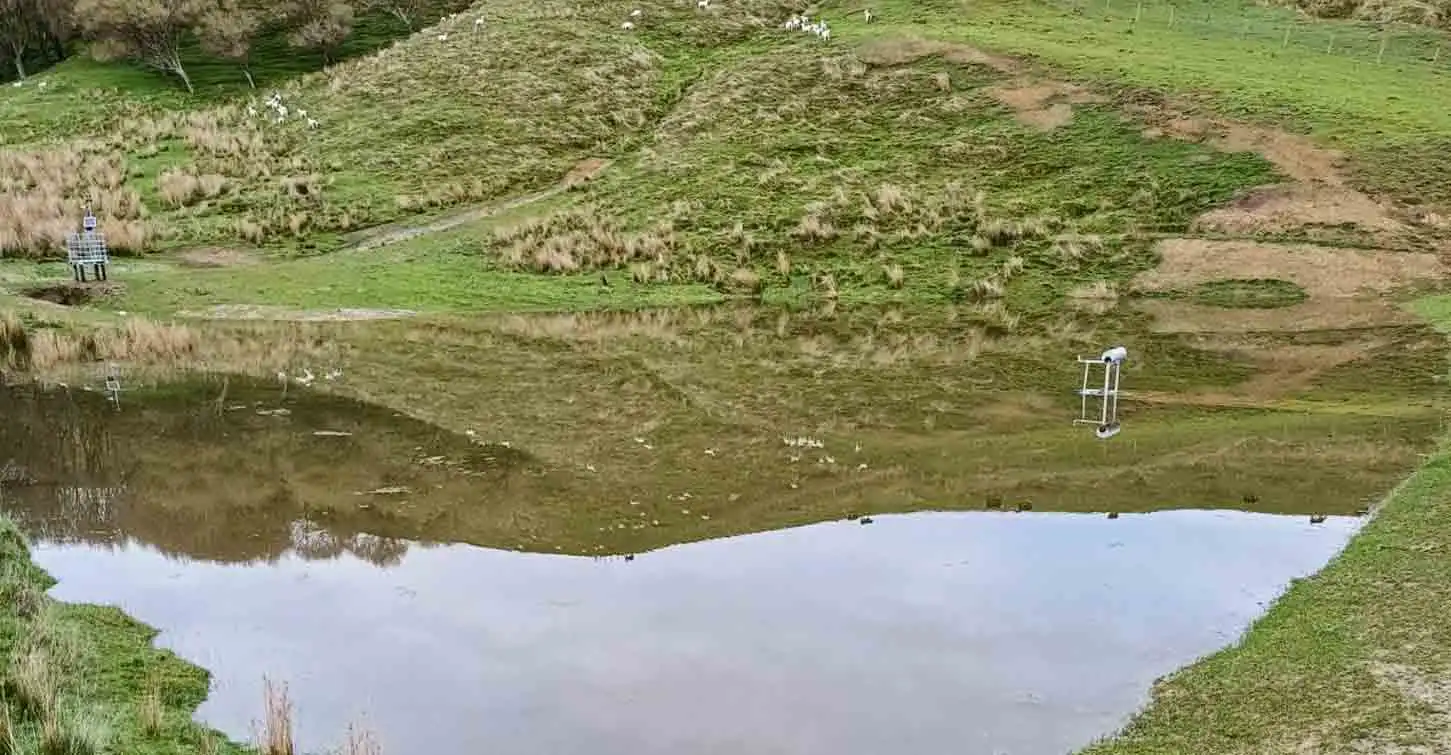
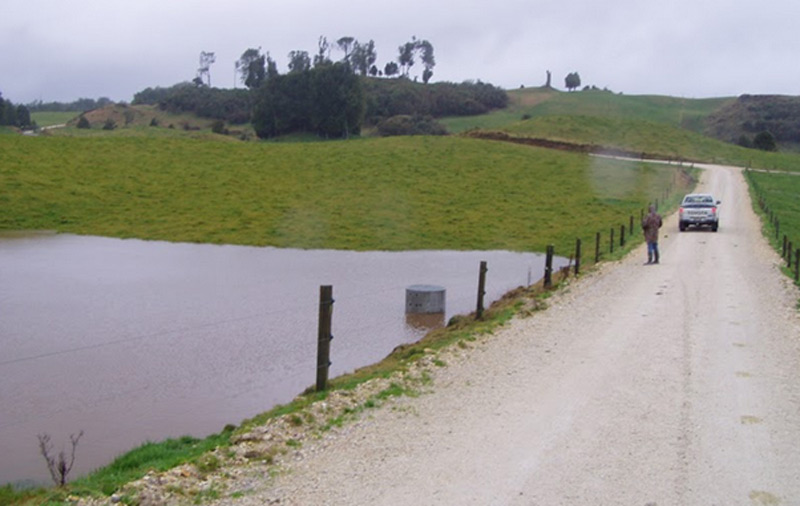
Water flowing overland in ephemeral streams is trapped behind the bund for up to three days to allow sediment, phosphorus and pathogens to settle out of the water.
Significant amounts of sediment and phosphorus are removed from the water during the detainment period.
Stock can be put back on the paddock once the water has been drained.
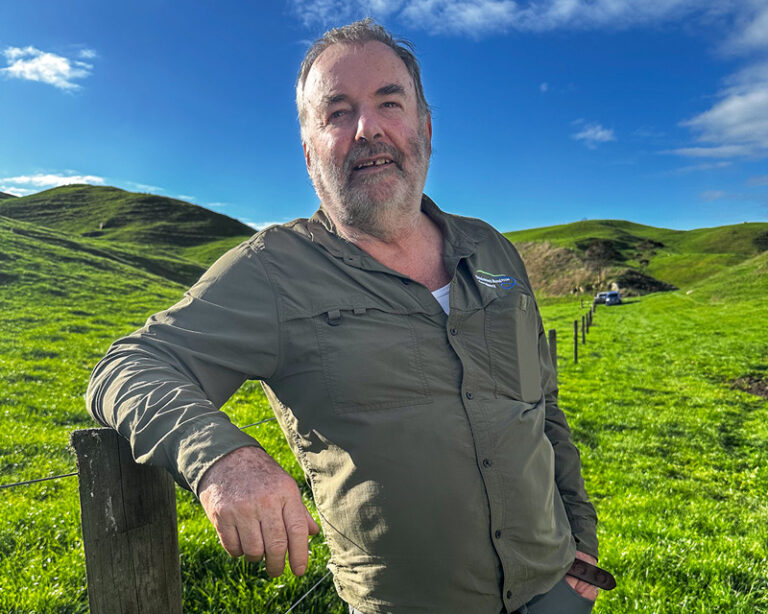
John is a geologist, with academic interests in geomorphology, and the fluvial processes of erosion, and sedimentology. Out in the mountains or on his deer farm, John the geomorphologist is always observing the effect of natural fluvial processes in action particularly the awesomeness of high intensity rainstorm runoff events. His ponderings ask, are such episodic storms with their loads of sediment, nutrients and pathogens carried off-farm, also an enormous opportunity? Should we dare to intercept and treat the enormity of high intensity rainstorm runoff events? The answers are yes.
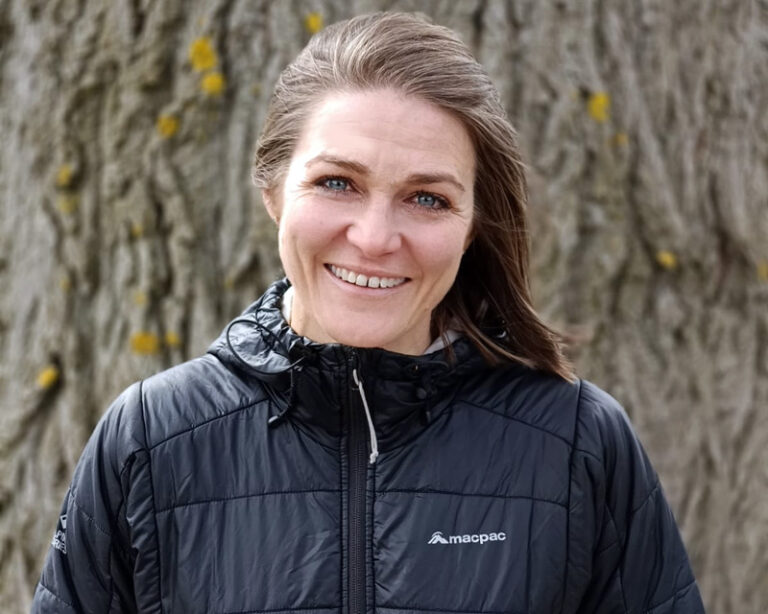
Natalie is an earth scientist with a background in soil science and hydrology, and a passion for the natural environment. Growing up on a dairy farm, she developed a firsthand understanding of the delicate balance between agriculture and environmental stewardship—an experience that continues to shape her work today.
Natalie brings both scientific expertise and practical insight to the complex challenges of stormwater and water quality management. While many solutions are being explored, Natalie believes that meaningful change requires practical, effective, and research-driven strategies. She is dedicated to helping landowners, communities, and industries implement solutions that not only enhance water quality but also support sustainable land management for future generations.